Introduction
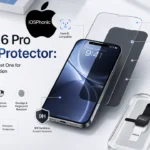
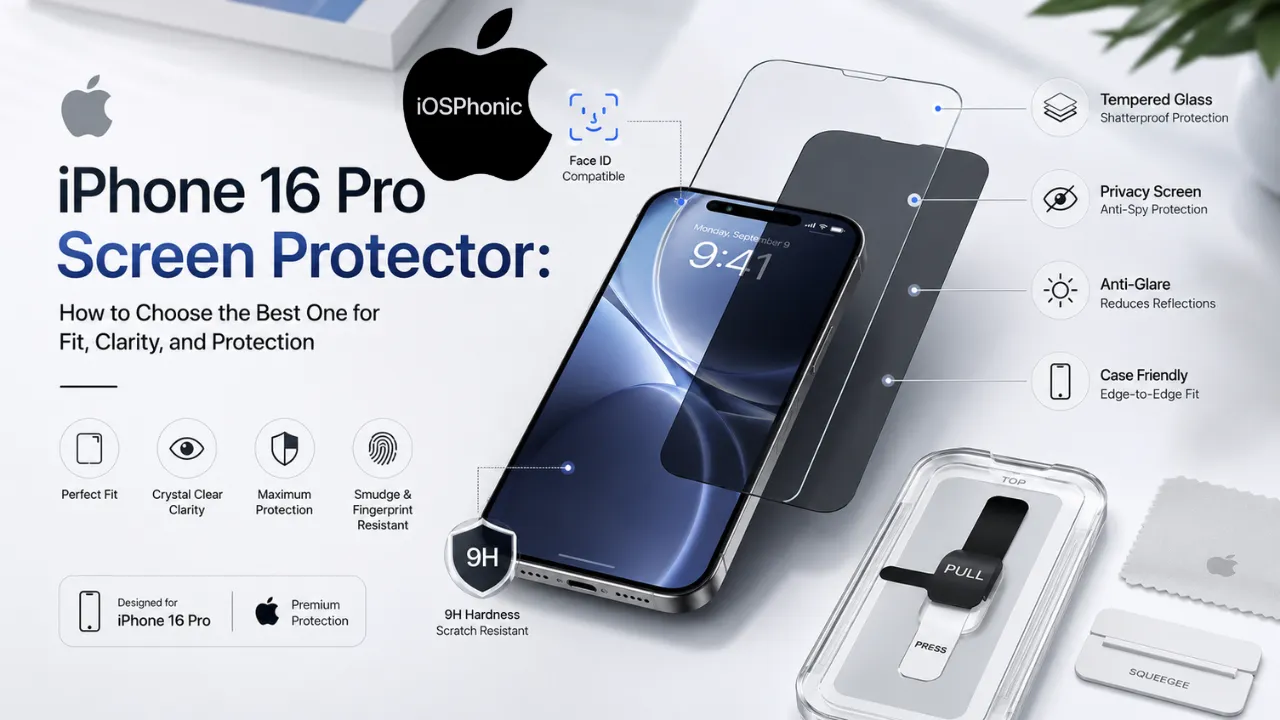
That first step toward an iPhone 16 Pro Screen guard feels straightforward – until shelves fill up with too many kinds. Glass that survived heat treatment shows up alongside panels dimming glare, each promising something different. One moment you’re just looking; next, a haze of terms like ceramic armor and full-coverage mounts clouds the view. Even placing it on the phone now needs its own frame-like jig.
A screen this sharp demands care. Built tough with Ceramic Shield, the iPhone 16 Pro fights cracks better than before. Its 6.3-inch OLED panel flows at 120Hz, crisp and bright. But even solid glass isn’t immune. Grit from pockets, contact with keys, bumps on rough tables – each adds tiny marks. Drops happen. Time wears things down. Little harms pile up, unseen.
Most users are not just searching for “a protector.” They want answers to real questions:
- Will it affect Face ID?
- Which type is best?
- Will my case lift the protector?
- Is privacy glass worth buying?
- How do I avoid bubbles?
This guide walks through every fix, one piece at a time. Rather than scattered picks, you discover how to match a screen shield to what you actually need, skip costly errors, and keep your device safe the right way.
What Is an iPhone 16 Pro Screen Protector?
A screen protector is a thin protective layer placed over your iPhone’s display.
Its purpose is to:
- Reduce scratches
- Protect against impact damage
- Minimize micro-abrasions
- Preserve resale value
- Reduce fingerprints
- Add privacy if needed
Think of it as insurance for your display.
Modern iPhones already include Ceramic Shield, but it mainly improves drop resistance. Scratch resistance and everyday wear protection are still separate concerns.
Featured Snippet Answer
What is the best type of iPhone 16 Pro screen protector?
For most users, tempered glass is the best option because it offers strong protection, excellent clarity, better touch response, and a feel closest to the original display.
Why Screen Damage Happens
Many people assume cracks only happen after major drops.
That is not true.
Most damage happens gradually.
Common causes include:
- Pocket sand particles
- Keys rubbing against glass
- Dust friction
- Bag pressure
- Drops from low heights
- Phone face-down placement
- Poor quality cases
- Daily micro-scratches
Even tiny scratches become visible over time under sunlight.
Why does this problem happen
Users usually buy the wrong protector because of these reasons:
1. Wrong Size Purchase
The iPhone 16 lineup uses different screen dimensions.
A protector made for another model may:
- Leave gaps
- Lift around corners
- Misalign sensors
2. Cheap Edge Design
Low-quality glass often has:
- Poor adhesive
- Weak edges
- Uneven fitting
3. No Case Compatibility
Cases push against screen edges.
This can create:
- Air bubbles
- Corner lifting
- Cracks
4. Poor Installation
Dust under the glass causes:
- Permanent bubbles
- Touch issues
- Bad appearance
5. Sensor Interference
Improper alignment may block:
- Face ID
- Front sensors
- TrueDepth camera
6. Low Transparency Material
Cheap protectors reduce:
- Brightness
- OLED clarity
- Color accuracy
Types of iPhone 16 Pro Screen Protectors
| Type | Protection | Clarity | Privacy | Feel |
| Tempered Glass | Excellent | Excellent | No | Original-like |
| Privacy Glass | Very Good | Good | Yes | Slightly darker |
| Matte Protector | Average | Moderate | No | Paper-like |
| Hydrogel Film | Basic | Good | No | Thin |
| PET Film | Low | Good | No | Plastic feel |
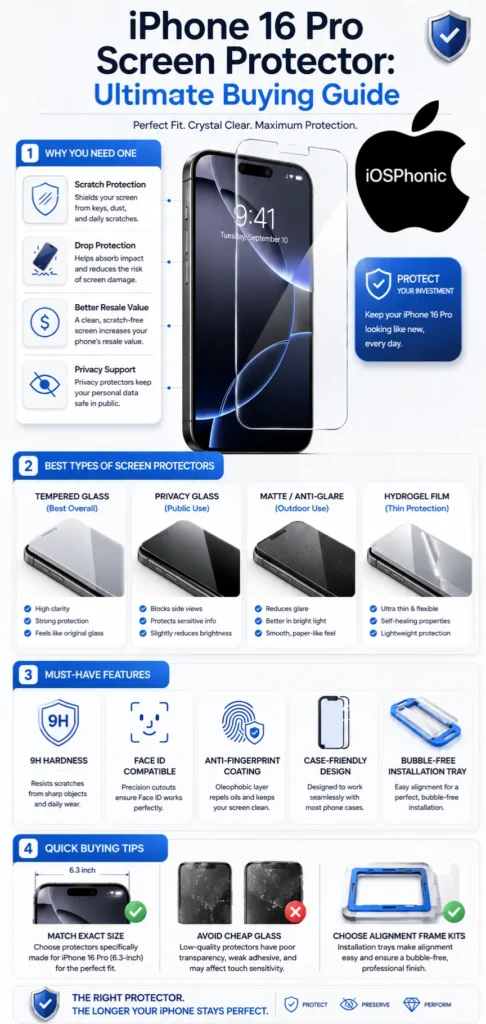
Tempered Glass
Best for:
- Most users
- Maximum protection
- Daily use
Advantages:
Scratch resistant
Easy install
Great touch feel
Better impact resistance
Disadvantages:
Slightly thicker
Privacy Glass
Best for:
- Office workers
- Travelers
- Public transport users
Advantages:
Prevents shoulder surfing
Protects sensitive information
Disadvantages:
Lower brightness
Reduced side viewing angles
Matte Screen Protectors
Best for:
- Outdoor use
- Gaming
- Bright environments
Advantages:
Less reflection
Reduced fingerprints
Disadvantages:
Slightly softer image quality
How to Choose the Best iPhone 16 Pro Screen Protector
Buying randomly often leads to disappointment.
Use this checklist.
Look for Exact Model Support
Choose:
Specifically for iPhone 16 Pro (6.3 inch)
Avoid:
- iPhone 16 Plus protectors
- iPhone 15 Pro protectors
- Universal protectors
Even tiny size differences matter.
Prioritize Case-Friendly Design
Good protectors leave a small spacing around edges.
This prevents:
- Lifting
- Cracking
- Pressure issues
Check Hardness Rating
Most quality options advertise:
9H hardness
This usually means stronger scratch resistance.
Anti-Fingerprint Coating Matters
Without coating:
- Oils accumulate quickly
- Smudges become visible
- Cleaning becomes annoying
Face ID Compatibility
A protector should never block:
- TrueDepth camera
- Front sensors
- Infrared hardware
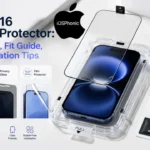
Installation Tray Is Worth It
Many premium kits now include:
- Alignment frame
- Dust Stickers
- Alcohol wipes
- Cleaning cloth
These dramatically reduce mistakes.
Comparison Table: Which Screen Protector Fits Your Needs?
| User Type | Recommended Choice |
| Students | Tempered glass |
| Travelers | Privacy glass |
| Office workers | Privacy protector |
| Gamers | Tempered glass |
| Outdoor users | Matte protector |
| Budget buyers | Multi-pack tempered glass |
| Content creators | Clear HD glass |
How to Install a Screen Protector Without Bubbles
Most people fail during installation.
Use this process.
Step 1: Turn Off Your Phone
Power down your iPhone.
This avoids accidental touches.
Step 2: Clean Thoroughly
Use:
- Microfiber cloth
- Alcohol wipe
- Dust sticker
Remove every particle.
Dust is the main reason bubbles happen.
Step 3: Use Alignment Frame
Place the guide tray carefully.
Do not rush.
Step 4: Peel Back Slowly
Remove the protective layer gently.
Avoid touching the adhesive.
Step 5: Align First
Match:
- Speaker cutout
- Front camera area
- Side spacing
Step 6: Press Center
Allow adhesive to spread naturally.
Do not force pressure.
Step 7: Remove Remaining Bubbles
Push air outward slowly.
Use the provided card.
Quick Fix Checklist
If your protector causes issues:
- Remove and reinstall
- Clean the screen again
- Check dust particles
- Confirm exact model
- Update iPhone software
- Re-register Face ID
- Check case compatibility
Will Screen Protectors Affect Face ID?
Usually no.
But cheap or poorly installed protectors can create problems.
Possible causes:
- Sensor obstruction
- Alignment issues
- Thick black borders
- Dust covering the camera area
If Face ID suddenly fails:
Fix Steps
- Remove protector
- Clean front sensors
- Restart iPhone
- Reinstall correctly
- Reset Face ID
Most issues disappear immediately.
Advanced Troubleshooting
If problems continue:
Reset Face ID
Settings
→ Face ID & Passcode
→ Reset Face ID
Create a fresh scan.
Update iOS
Sometimes software bugs affect recognition.
Go to:
Settings
→ General
→ Software Update
Install the latest version.
Remove Damaged Protector
Cracked protectors create:
- sensitivity issues
- dead zones
- touch lag
Replace immediately.
Pros and Cons of Screen Protectors
| Pros | Cons |
| Protects against scratches | Small added thickness |
| Improves resale value | Cheap versions reduce clarity |
| Adds privacy options | Poor installs create bubbles |
| Helps absorb impacts | Some reduce brightness |
Pro Tips and Hidden Tricks
1. Install in Bathroom After Hot Shower
Steam reduces floating dust.
Professional installers use similar methods.
2. Buy Two-Pack Kits
You may fail the first installation.
Extra sheets save money.
3. Replace Cracked Protectors Quickly
A damaged protector loses structural strength.
4. Do Not Stack Multiple Protectors
Double layers reduce:
- Touch response
- Brightness
- Face ID performance
5. Avoid Ultra-Cheap Glass
Very cheap products often use:
- Weak adhesive
- Poor transparency
- Inaccurate dimensions
6. Store Cleaning Stickers
Useful for future dust removal.
7. Remove Cases Carefully
Twisting can crack the protector corners.
Common Mistakes to Avoid
Many users accidentally ruin protectors.
Avoid these mistakes:
Buying the wrong model
Ignoring case compatibility
Installing in dusty rooms
Touching the adhesive side
Using abrasive cleaners
Choosing price over quality
Applying excessive pressure
Privacy and Data Safety Notes
Privacy glass helps protect information from nearby people.
Useful for:
- Banking
- Emails
- Work messages
- Travel
- Public transport
But remember:
Privacy glass does not secure data from malware or hackers.
Frequently Asked Questions
Ceramic Shield improves durability but is not completely scratch-proof.
Good quality protectors should not affect touch response.
Tempered glass usually offers the best long-term durability.
Yes. They often reduce brightness slightly.
Small bubbles sometimes disappear after 24–48 hours.
Dust bubbles usually do not.
Final Verdict
One wrong move and everything goes sideways – screen protectors for the iPhone 16 Pro prove that price doesn’t promise performance. Fit matters first: too big, too small, it fails before you even try. A solid match hugs every Edge of that 6.3-inch face like it was made for it. Without a smooth Face ID function? Toss it aside. Compatibility with cases isn’t optional – it’s expected. Clarity stays sharp only if the film refuses to cloud or dull colors. Bubbles or fingerprints on the application mean frustration wins. Peace comes when setup feels quiet, almost effortless.
Most people still find the best protection comes from tempered glass that includes a fitting frame plus a finish that resists smudges.
Later on, small savings now might prevent big bills later. What you spend upfront often cuts future headaches by a lot.
For more practical iPhone buying guides and troubleshooting tutorials, explore more articles on iosphonic.com.